
You say yes when you want to say no.
You take on the client who haggles or pushes boundaries because an empty spot in your roster feels more dangerous.
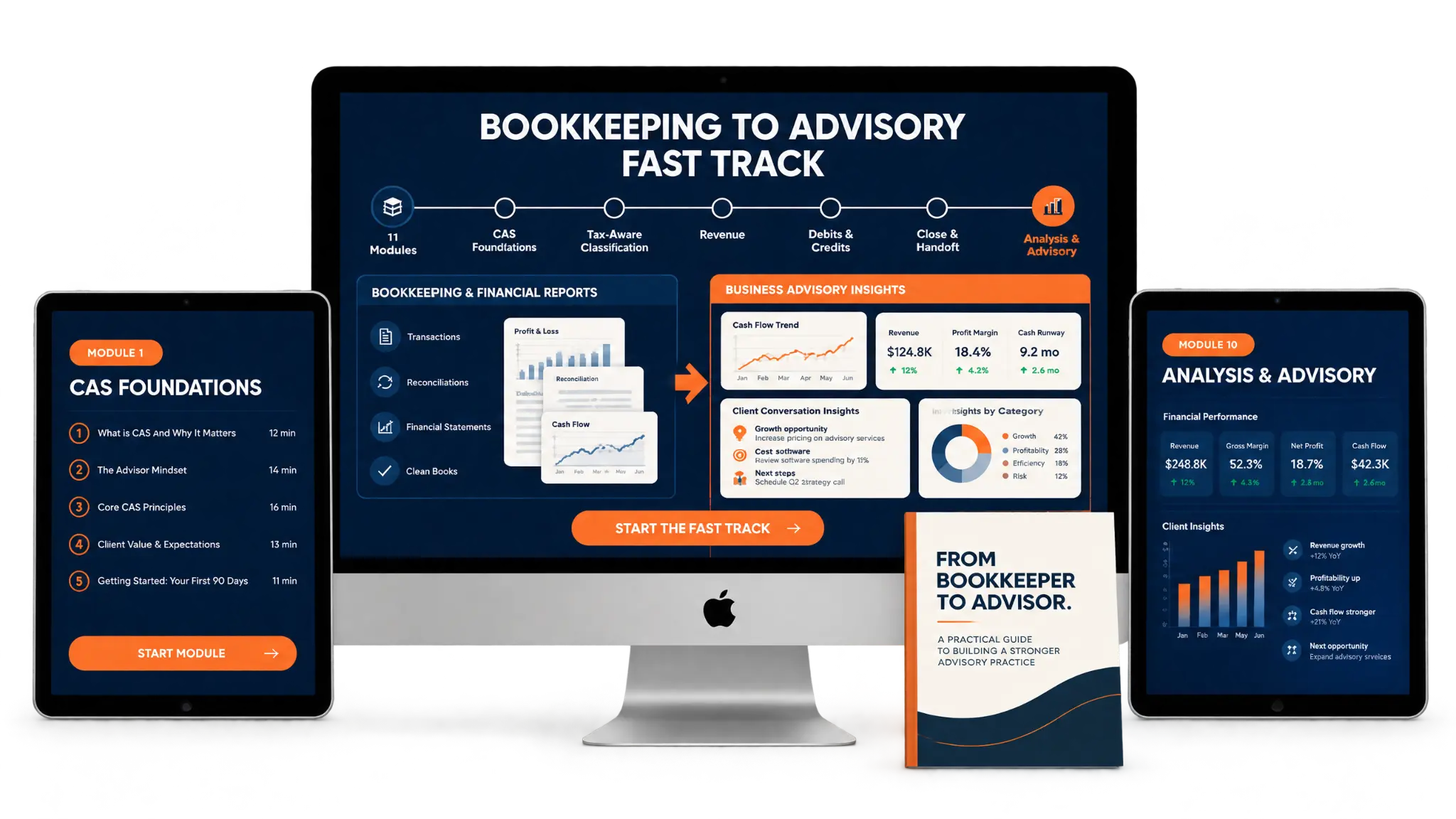
Bookkeeping to Advisory Fast Track teaches the why behind the numbers so you can prepare CPA-ready books, explain what the reports mean, and bring meaningful insights to your client conversations.
You know how to close the month. But when a client asks why profit looks strong while cash feels tight, you may say, “Let me look into that,” then spend an unpaid hour searching for the answer after the call.
It is what happens when you are taught "what" to do and "how" to do it, without the accounting principles beneath it. Knowing how to enter a transaction is not the same as knowing why it belongs there. The gap can follow you into pricing, client conversations, and the decisions you make about your business.
It shows up in the business decisions and client work you make every day. See if any of these feel familiar.
You take on the client who haggles or pushes boundaries because an empty spot in your roster feels more dangerous.
You tell yourself you need more experience before you can defend what your work is worth.
You redo a journal entry or question a report because the accounting underneath it still feels uncertain.
When a business owner wants to know what the numbers mean, you hesitate to guide the conversation.
You do not need another lesson in “owning your worth.” You need to understand the principles behind the work you already do.
Bookkeeping to Advisory Fast Track moves through the work in a deliberate sequence. Understand the accounting. Apply it to real transactions. Prepare better CPA handoffs. Then explain the financial story to your client.
Explore the programLearn the accounting cycle and debits and credits behind your everyday workflows.
Classify by entity type, manage complexity, and close with clarity.
Build a one-page dashboard and guide a conversation around what matters.
Seventy-two bite-sized lessons build from the foundation you may have missed to the client conversations you want to lead.
See the accounting cycle behind the tasks you already do.
Bookkeeping purpose · matching · reconciling · reportsBuild a chart of accounts that makes sense for the entity and its tax return.
Schedule C · partnerships · corporations · inventoryUnderstand why a deposit is not always income and follow the full payment trail.
Products & services · undeposited funds · processorsMake double-entry accounting click instead of memorizing rules you cannot explain.
Natural balances · moving money · double entryExplain how a profitable business can still feel short on cash.
Cash vs. accrual · payables · receivablesHandle the asset transactions that demand more than a bank-feed categorization.
Prepaids · journal entries · fixed assets · depreciationTrack what the business owes and reconcile complex payroll activity.
Credit cards · sales tax · payroll · loansRecognize how ownership and entity type affect the balance sheet.
Owner draws · partnerships · corporations · basisPrepare clean, communicative books that tax professionals can work with.
Month end · year end · CPA communicationTurn financial reports into a one-page dashboard and a conversation your clients are starving for.
Trends · cash flows · dashboard · deeper insightsBuild the judgment and trust that sustain an advisory practice.
Honesty · objectivity · confidentiality
I finally have a real grasp of debits and credits. Margie does a great job of explaining it in very practical terms.
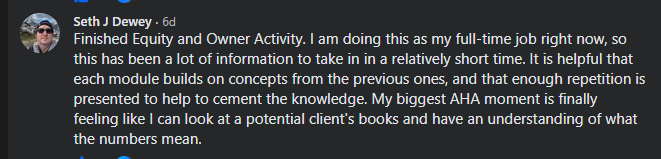
My biggest AHA moment is finally feeling like I can look at a potential client's books and have an understanding of what the numbers mean.

I have had college level accounting and master's level accounting but this is the first time I truly understand it and am not just guessing.
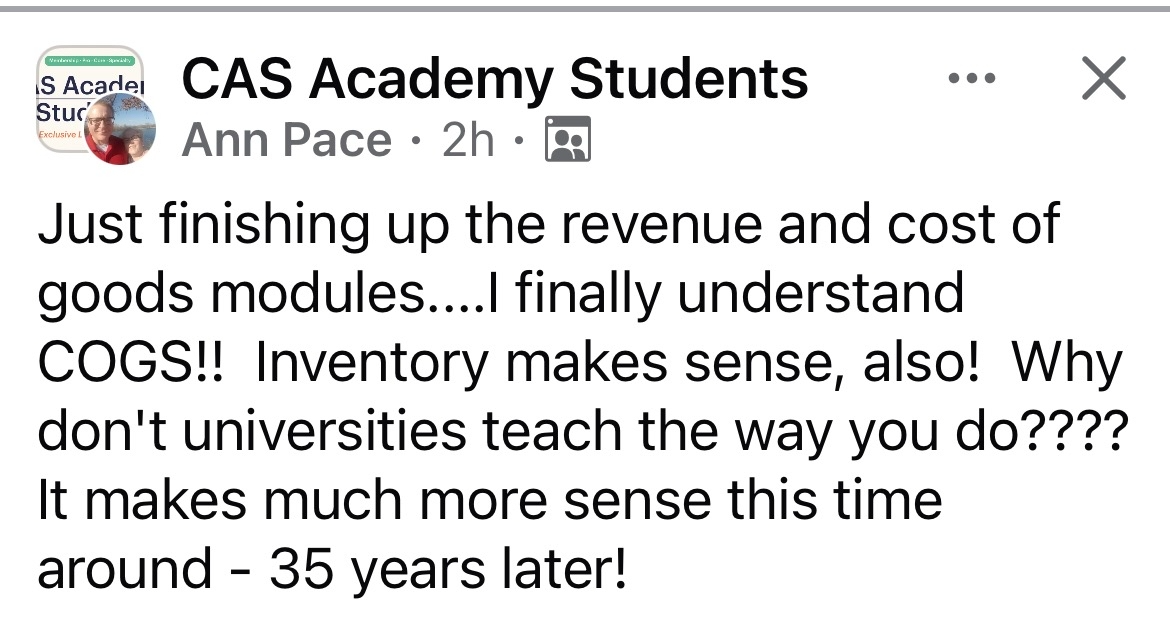
Why don't universities teach the way you do???? It makes much more sense this time around - 35 years later!
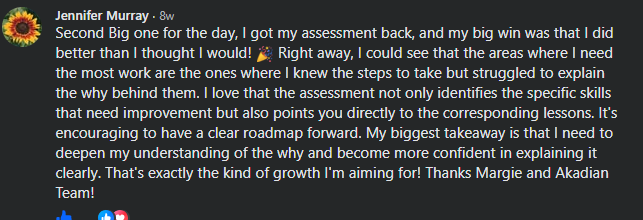
I love that the assessment not only identifies the specific skills that need improvement but also points you directly to the corresponding lessons.
The assessment is DIFFICULT, but so worth it to have confidence! Just submitted mine this week! :)
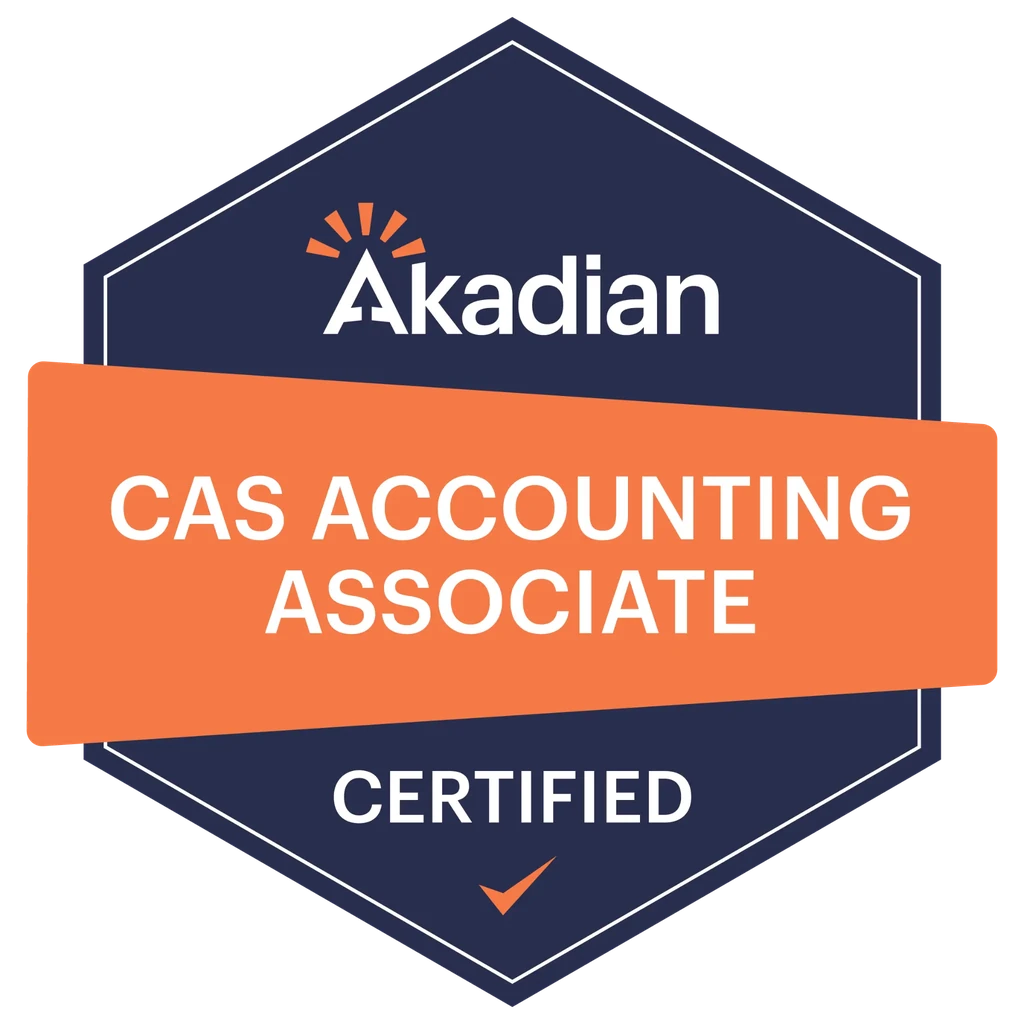
Complete the Fast Track curriculum to become eligible for Akadian’s Certified CAS Accounting Associate (CAA) exam. Pass the exam and meet the certification requirements to earn the credential.
This is a way to demonstrate that you understand the accounting behind the software and can show up to client and CPA conversations with a stronger foundation. Certification is earned, not automatic.
See what is includedSelf-paced does not mean figuring everything out by yourself.
Work through the 42-hour program in manageable study windows. No cohort to fall behind and no live class you must attend to keep up.
Bring course and client-work questions to an enrolled agent with over 30 years of experience.
Join virtual coworking with other bookkeepers for accountability and a more consistent path to completion.
The goal is not a new mindset slogan. It is a stronger grasp of the accounting that can change how you approach your work and the conversations around it.
Understand why the entry, account, or report makes sense, so you have a clearer basis for your decisions.
Know what your work requires and brings to the client, rather than waiting for a feeling of permission to charge appropriately.
A stronger foundation can make it easier to recognize which work fits your practice and when to say no.
Move beyond delivering reports and practice guiding the conversation a business owner wants to have.
Your experience will depend on the work you put in. No course guarantees a rate increase, a client outcome, or a specific income.
Choose the one-time course or an ongoing CAS Academy membership.
Own your path through the full 11-module curriculum.
Fast Track plus access to Akadian’s course library while your membership remains active.
Complete the required coursework and give the program a real chance. If you do the work and do not feel more competent and prepared to serve clients at a higher level, contact Akadian within 60 days for a refund under the program’s guarantee.
Documented coursework completion is required. Full terms apply at checkout.Know what you are choosing before you invest in your next chapter.
The program includes 42 hours of self-paced content across 72 lessons. Work through it in manageable study windows, with no cohort to fall behind and no live class you must attend to keep up.
Daily open office hours for course and client-work questions, plus ten Study Halls a week for virtual coworking and accountability.
Course-only enrollment is $1,497 one-time; third-party financing may be available at checkout. CAS Academy is a separate $197 monthly membership that includes Fast Track. Review its full terms on the Academy page before choosing.
Knowing about accounting is not the same as knowing how to use it. You work through accounting concepts in depth, practice applying them to bookkeeping situations, and explain your reasoning in your own words. The goal is to understand what makes sense, not repeat steps just because. QuickBooks Online examples connect that understanding to the work.
No. The course starts with bookkeeping fundamentals and builds toward more involved accounting and client conversations. It is designed for people starting out and for working bookkeepers who want deeper understanding.
Consider it if you can do the bookkeeping tasks but want a stronger grasp of why the entries, balances and reports make sense. The course begins with the foundation and builds into more involved accounting and client-facing work.
No. CAA requires at least 90% on every course worksheet and quiz, then an Advanced rating on the open-book Advanced Bookkeeping Assessment. You explain concepts in your own words. Some submissions may receive additional competency verification.
After earning CAA, enter your Credly badge and choose up to ten firms for one request. You can submit fewer than ten, but you do not get a second chance to use the remaining introductions. Akadian sends each firm an introduction letter, a card with your Credly and LinkedIn QR codes, and an employer guide to the assessment.
We make the introduction. You take it from there. It may lead to a job, overflow work, referrals, or nothing. There is no job, interview, income or client guarantee.
The curriculum gives employees a structured accounting foundation and a defined competency target. Use it alongside your firm's own systems, review standards and client-specific procedures. Ask Akadian about current team enrollment options.
It teaches tax-aware bookkeeping and working with the tax preparer. It does not position learners as qualified to give tax advice or prepare every type of return.
Do the work. Build the foundation. Learn to explain what the numbers mean. The path from reliable bookkeeper to stronger advisor starts here.
See your enrollment options